1997 The Nobel Prize in Physics

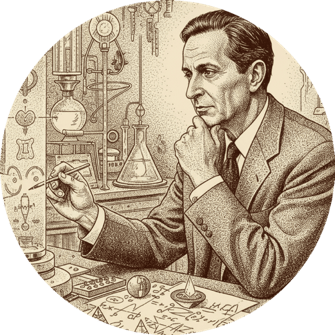

[1997 Nobel Physics Prize] Claude Cohen-Tannoudji / Steven Chu / William D. Phillips : The Quantum Chill Masters: Freezing Atoms with Light for Unprecedented Control!
"These three wizards figured out how to slow down and hold onto individual atoms using nothing but laser light, opening doors to unimaginable quantum experiments."
They developed groundbreaking laser cooling and atom trapping techniques, allowing scientists to study atoms with unprecedented precision, revealing new quantum phenomena."Imagine trying to catch a tiny, super-fast bullet with a feather – that's essentially what they achieved with atoms!"
Atoms usually zip around at incredible speeds, making them almost impossible to observe or manipulate individually. Their methods tamed this atomic chaos.
The Blurry Atomic Blur: Why We Needed a Quantum Slow-Mo Button 🤯
Before these brilliant minds stepped in, studying individual atoms was like trying to photograph a hummingbird with a blurry camera while it was flying at Mach 1. Atoms are incredibly tiny and move at mind-boggling speeds, making precise measurements a nightmare. Their frantic thermal motion blurred out any delicate quantum effects we hoped to observe. We needed a way to slow them down, to freeze them in place, to truly get a good look at the quantum weirdness without all the jiggling. It was a scientific bottleneck, a quantum traffic jam preventing us from exploring the true potential of matter.
Meet the Atomic Tamer Trio: From Parisian Ponderings to Stanford's Spark! ✨
Claude Cohen-Tannoudji, a brilliant French theoretical physicist, brought his deep understanding of quantum mechanics and light-matter interactions, laying much of the theoretical groundwork. Think of him as the grand strategist, mapping out the battlefield before the lasers even fired.
Steven Chu, an American experimental physicist, was a dynamic force, known for his innovative experiments at Bell Labs and later Stanford. He's the guy who actually built the crazy contraptions and made the lasers do the impossible. He even went on to become the US Secretary of Energy! Talk about range!
William D. Phillips, another American physicist from NIST, was a master of precision and practical application, refining the techniques and pushing the limits of how cold and how stable atoms could be. He's the meticulous engineer, perfecting the machinery. Together, they were an unstoppable team, each bringing a unique superpower to the quest for atomic control.
 Claude Cohen-Tannoudji
 Steven Chu
 William D. Phillips
The Laser Light Trick: How to Chill an Atom with a Photon Hug! 💖
The core achievement, "development of methods to cool and trap atoms with laser light," sounds like sci-fi, but it's pure genius! Imagine an atom as a tiny, super-energetic billiard ball. Instead of hitting it with another ball to slow it down, these scientists used laser beams! When a laser photon (a particle of light) hits an atom, it imparts a tiny kick. If you strategically aim lasers from all directions, specifically tuned to a frequency that the atom absorbs when it's moving towards the laser, the atom gets repeatedly "kicked" in the opposite direction of its motion. It's like running into a strong headwind from every direction – you slow down! This process is called Doppler cooling.
Once slowed to near absolute zero, these atoms are still a bit slippery. So, they used magnetic fields or carefully configured laser beams to create an "optical molasses" or "magnetic trap," like an invisible cage, to hold the chilled atoms in place. This combination of laser cooling and atom trapping essentially puts atoms in a quantum deep-freeze and then gives them a comfy, stable home.
From Atomic Ice Cubes to Quantum Leaps: A World Transformed! 🚀
The ability to cool and trap atoms wasn't just a neat parlor trick; it revolutionized physics and beyond! It paved the way for creating Bose-Einstein condensates (BECs), a new state of matter where atoms behave as one giant quantum wave – a truly mind-bending phenomenon.
This precision control over atoms led to the development of incredibly accurate atomic clocks, which are now fundamental for GPS systems, global communication, and even testing theories of relativity. Imagine your phone navigating you perfectly thanks to atoms chilled by lasers! It also opened doors for quantum computing research, where individual atoms could become the building blocks of future super-fast computers. Furthermore, it allows for ultra-precise measurements in fundamental physics, probing the very nature of reality.
"Thanks to their pioneering work, we can now manipulate individual atoms with unprecedented control, unlocking quantum secrets and building technologies that were once confined to science fiction!"
The 'Optical Molasses' That Wasn't Quite Molasses Enough! 🍯
Fun fact: When Steven Chu and his team first demonstrated laser cooling, they thought they had cooled atoms down to the Doppler limit, a theoretical minimum temperature. They even called their trapping method "optical molasses" because it felt like the atoms were moving through a thick, viscous liquid. However, William D. Phillips and his group later found that they could cool atoms even colder than the Doppler limit! This "sub-Doppler cooling" was a surprising discovery, showing that the atoms were interacting with the laser light in more complex ways than initially understood. It was a delightful "oops, we're even better than we thought!" moment in quantum physics! 😂
[1997 Nobel Physics Prize] Claude Cohen-Tannoudji / Steven Chu / William D. Phillips : The Quantum Chill: Taming Atoms with Light for Unprecedented Exploration
- The development of laser cooling techniques revolutionized the ability to slow down and study individual atoms, opening new frontiers in physics.
- The creation of atomic traps allowed scientists to hold these super-cooled atoms in place, enabling unprecedented control and observation of quantum phenomena.
- This groundbreaking work laid the essential foundation for the realization of Bose-Einstein condensates and paved the way for ultra-precise measurements in various scientific and technological applications.
The Quest for Stillness: Physics on the Brink of the Quantum Frontier 🕰️
Before the pivotal breakthroughs of the 1980s, the dream of studying individual atoms in isolation, free from the chaotic thermal motion that typically governs their behavior, remained largely out of reach. Atoms in a gas, even at relatively low temperatures, zip around at speeds of hundreds of meters per second, making precise measurements of their intrinsic properties incredibly challenging. Imagine trying to photograph a hummingbird with a slow shutter speed – the image would be a blur. Similarly, the rapid, random motion of atoms blurred any attempts to probe their quantum secrets.
The scientific community, particularly in the 1970s and early 1980s, was increasingly captivated by the potential of manipulating matter at its most fundamental, quantum level. This era was characterized by a growing understanding of quantum mechanics and the burgeoning capabilities of laser technology. Lasers, once a laboratory curiosity, were becoming powerful, tunable tools, offering light with unprecedented precision in frequency and intensity. Physicists began to ponder if this precise light could be used not just to observe atoms, but to actively control them.
A major theoretical prediction that fueled this quest was the existence of Bose-Einstein condensates (BECs), a novel state of matter where a collection of atoms, cooled to near absolute zero, collapses into a single quantum mechanical wave. Predicted by Albert Einstein and Satyendra Nath Bose in 1924, BECs remained an elusive theoretical concept for decades because achieving the necessary temperatures—mere microkelvins above absolute zero—seemed an insurmountable experimental hurdle. The prevailing atmosphere was one of intense competition and collaborative innovation, as researchers worldwide raced to develop methods that could bring atoms to a virtual standstill, thereby unlocking a new realm of quantum exploration. The challenge was immense: how to gently, yet effectively, strip atoms of their kinetic energy without disturbing their delicate quantum states.
From Diverse Paths to a Shared Quantum Vision 🖊️
The 1997 Nobel laureates, Steven Chu, Claude Cohen-Tannoudji, and William D. Phillips, each brought unique perspectives and expertise to the challenge of taming atoms with light, ultimately converging on a shared vision that transformed quantum physics.
Steven Chu, born in St. Louis, Missouri, in 1948, was the son of Chinese immigrants who instilled in him a deep appreciation for education and scientific inquiry. He earned his Ph.D. from the University of California, Berkeley, in 1976. His career took a pivotal turn when he joined Bell Labs, a hotbed of innovation, where he would make his most significant contributions to laser cooling. Chus early work was characterized by a bold experimental approach, seeing the potential of laser light to slow down atoms, a concept that many initially found counter-intuitive. His persistence paid off when his team developed the first successful "optical molasses" technique, demonstrating that atoms could indeed be cooled using laser light. His ability to translate theoretical concepts into practical, working experimental setups was crucial. After his groundbreaking work, Chu moved to Stanford University, continuing his research, and later served as the US Secretary of Energy under President Barack Obama, showcasing his commitment to both fundamental science and its societal impact.
Claude Cohen-Tannoudji, born in Constantine, Algeria, in 1933, became a French citizen and pursued his academic journey at the prestigious École Normale Supérieure in Paris. He completed his Ph.D. in 1962 under the guidance of Alfred Kastler, a future Nobel laureate (1966) for his work on optical methods for studying Hertzian resonances in atoms. Cohen-Tannoudjis contributions were primarily theoretical, but profoundly influential. As a professor at the Collège de France, he dedicated himself to developing a deeper, more nuanced understanding of the intricate forces exerted by laser light on atoms. His theoretical framework was instrumental in explaining phenomena that experimentalists observed but couldn't fully comprehend, particularly the mechanisms that allowed cooling beyond the initial theoretical limits. His struggles involved refining complex quantum electrodynamics to accurately predict and interpret the subtle interactions between light and matter, leading to the groundbreaking concept of Sisyphus cooling, which pushed the boundaries of atomic cooling far beyond what was initially thought possible.
William D. Phillips, born in Juniata, Pennsylvania, in 1948, earned his Ph.D. from the renowned Massachusetts Institute of Technology (MIT) in 1976. He then joined the National Bureau of Standards (NBS), which later became the National Institute of Standards and Technology (NIST). Phillips, working independently, also developed and refined laser cooling techniques. His meticulous experimental work led to the independent discovery and demonstration of the "optical molasses" method, confirming Chus findings. Crucially, Phillipss group made the astonishing discovery that atoms could be cooled to temperatures much lower than the theoretical "Doppler limit" predicted by the initial understanding of laser cooling. This unexpected result challenged the prevailing theories and spurred intense theoretical investigation. His persistence lay in his rigorous experimental approach and his unwavering commitment to probing the limits of what was achievable in the laboratory, ultimately leading to the identification and explanation of the sub-Doppler cooling mechanisms, which Cohen-Tannoudji would later theoretically elucidate. Together, these three scientists, through their distinct yet complementary paths, forged the tools and understanding necessary to bring the quantum world of atoms to a near standstill.
The Art of the Chill: Laser Light's Gentle Grip on Atoms 🔬
The 1997 Nobel Prize in Physics recognized Claude Cohen-Tannoudji, Steven Chu, and William D. Phillips for their "development of methods to cool and trap atoms with laser light." This seemingly simple statement encapsulates a profound revolution in our ability to manipulate matter at its most fundamental level. The core challenge they addressed was how to slow down atoms, which, even at room temperature, move at speeds comparable to a jet plane, and then hold them in place for study.
The Problem: Taming Atomic Motion
Atoms in a gas are in constant, rapid, and random motion. This thermal motion blurs spectroscopic measurements, makes it difficult to observe individual quantum effects, and prevents the formation of exotic states of matter like Bose-Einstein condensates. To truly understand and harness the quantum properties of atoms, they needed to be brought to a virtual standstill, cooled to temperatures just fractions of a degree above absolute zero.
Doppler Cooling: The First Step Towards Stillness (Steven Chu, William D. Phillips)
The initial breakthrough came from exploiting the Doppler effect, a phenomenon familiar from sound waves (e.g., a siren's pitch changing as it approaches or recedes).
1. Principle: When an atom moves towards a laser beam, it "sees" the light shifted to a higher frequency (bluer) due to the Doppler shift. Conversely, if it moves away, it sees the light shifted to a lower frequency (redder).
2. Mechanism: The trick is to tune the laser frequency slightly below the atom's natural resonant frequency (a process called red-detuning).
* An atom moving towards a laser beam will experience a Doppler shift that brings the laser light's frequency closer to its resonant frequency. This makes the atom more likely to absorb a photon from that beam.
* When the atom absorbs a photon, it gains the photon's momentum, which pushes the atom slightly against its direction of motion, thus slowing it down.
* After absorbing, the atom quickly re-emits a photon in a random direction. Since the re-emission is random, over many cycles, the net momentum gained from re-emission averages to zero.
* The net effect is a continuous "radiation pressure" that acts as a viscous damping force, constantly opposing the atom's motion.
3. "Optical Molasses": Steven Chu and his team at Bell Labs, and independently William Phillipss group at NIST, demonstrated this principle by using six laser beams – a pair along each of the x, y, and z axes – converging at a central point. Atoms entering this region are simultaneously bombarded by light from all directions. An atom moving in any direction will preferentially absorb photons from the beam opposing its motion, effectively slowing it down. This creates a region where atoms move as if immersed in a thick, invisible fluid, hence the name "optical molasses." This technique successfully cooled atoms to temperatures around 240 microkelvins, a temperature close to the theoretical Doppler limit (T_D = ħΓ / (2k_B), where ħ is the reduced Planck constant, Γ is the natural linewidth of the atomic transition, and k_B is the Boltzmann constant).
Atomic Trapping: Holding the Cooled Atoms (Steven Chu, William D. Phillips)
While optical molasses could cool atoms, it couldn't hold them in a specific location indefinitely; the atoms would eventually diffuse out. To truly study them, a "trap" was needed.
1. Magneto-Optical Trap (MOT): Developed by Steven Chus group, the MOT combines the principles of laser cooling with a specially designed magnetic field.
2. Mechanism: A pair of coils creates a magnetic field that is zero at the center and increases linearly in strength away from the center. This magnetic field causes a splitting of the atomic energy levels (the Zeeman effect), with the amount of splitting depending on the field strength. By carefully tuning the laser beams and their polarizations, atoms that drift away from the center of the trap experience a restoring force from the laser light, pushing them back towards the center. This effectively creates a "magnetic bottle" that both cools and traps the atoms, holding them in a small, dense cloud.
Sub-Doppler Cooling: Breaking the Limit (William D. Phillips, Claude Cohen-Tannoudji)
The Doppler limit was initially believed to be the fundamental lowest temperature achievable with laser cooling. However, William Phillipss meticulous experiments yielded a surprising result: his group observed atoms cooled to temperatures significantly below the Doppler limit, sometimes by a factor of ten or more (tens of microkelvins). This experimental finding challenged the existing theoretical understanding.
- Sisyphus Cooling (Claude Cohen-Tannoudji): Claude Cohen-Tannoudji provided the crucial theoretical explanation for this "sub-Doppler" cooling, a mechanism often referred to as Sisyphus cooling (named after the Greek myth of Sisyphus, condemned to roll a boulder uphill only for it to roll back down).
- Mechanism: This sophisticated cooling technique relies on the interaction of atoms with polarized laser light in a standing wave configuration.
- As an atom moves through a spatially varying polarization gradient created by counter-propagating laser beams, its internal energy levels (specifically, Zeeman sublevels) are shifted.
- An atom climbing a "potential hill" (a region where its internal energy is higher) loses kinetic energy.
- At the peak of this hill, the atom is optically pumped by the laser light to a different internal state, which corresponds to a lower energy state in that specific location.
- It then effectively "rolls back down" the potential hill, but only after having lost kinetic energy in the previous uphill climb.
- This continuous cycle of climbing a potential hill, losing kinetic energy, and being optically pumped to a lower energy state, repeatedly drains the atom's kinetic energy, allowing for cooling well below the Doppler limit.
These combined methods—Doppler cooling for initial slowing, MOTs for trapping, and sub-Doppler cooling for ultra-low temperatures—provided scientists with unprecedented control over individual atoms, opening the door to a new era of quantum physics.
The Race to Absolute Zero: Unseen Battles and Unsung Heroes 🎬
The scientific landscape of laser cooling in the 1980s was a vibrant, highly competitive, and rapidly evolving field. While Chu, Phillips, and Cohen-Tannoudji were ultimately recognized for their seminal contributions, their work stood on the shoulders of many other brilliant scientists, and the path to discovery was not without its dramatic turns and intellectual challenges.
Claude Cohen-Tannoudji
Steven Chu
William D. Phillips
One of the most significant "hidden stories" was the Doppler Limit Controversy. The initial theoretical understanding of laser cooling, based on the Doppler effect, predicted a fundamental lower bound for the achievable temperature – the Doppler limit. This limit was a cornerstone of the early theory. However, when William Phillipss group at NIST experimentally observed atoms cooled to temperatures significantly below this predicted limit, it created a genuine scientific puzzle. This wasn't a "rivalry" in the sense of personal animosity, but rather a critical failure of the existing theoretical framework to fully explain experimental reality.
This discrepancy was a dramatic moment for the field. It forced physicists to re-evaluate their understanding of light-atom interactions. The initial reaction was a mix of skepticism and intense curiosity. Was there an error in the experiments? Or was the theory incomplete? This intellectual challenge spurred new theoretical work, most notably by Claude Cohen-Tannoudji and his collaborators, who developed the more sophisticated quantum mechanical descriptions, such as Sisyphus cooling, that could accurately account for these "sub-Doppler" temperatures. This episode highlights a crucial aspect of scientific progress: when experiment contradicts theory, it often leads to deeper insights and a more complete understanding of nature. The "failure" of the initial theory was, in fact, a catalyst for a profound leap forward.
Furthermore, the concept of manipulating particles with light had roots even earlier. Arthur Ashkin, also at Bell Labs, had pioneered the use of radiation pressure to trap microscopic particles in the 1970s, a technique he later extended to atoms. While Ashkin would eventually receive his own Nobel Prize in 2018 for optical tweezers, his foundational work on the forces exerted by light was a crucial precursor. The development of the Magneto-Optical Trap (MOT), while credited to Chus group, also saw rapid independent development and refinement by other research groups around the world, building upon the initial ideas and contributing to its widespread adoption.
The Nobel Prize, by its nature, recognizes specific breakthroughs and individuals, but it's important to remember that science is a collective endeavor. Many unsung heroes, postdocs, graduate students, and other research groups contributed to the broader understanding and technological advancements that made these prize-winning discoveries possible. The race to achieve colder and colder atoms was a thrilling intellectual pursuit, marked by both intense competition and a shared passion for unraveling the mysteries of the quantum world.
From Frozen Atoms to Everyday Innovations 📱
The seemingly esoteric ability to cool and trap atoms with laser light, a feat of pure scientific curiosity, has blossomed into a cornerstone of modern technology and fundamental research, impacting fields from precision timekeeping to the future of computing.
One of the most direct and impactful applications is in Atomic Clocks. These devices, which measure time with extraordinary accuracy, are the backbone of our modern technological infrastructure. By using laser-cooled atoms, scientists can achieve much longer interaction times and significantly reduce the Doppler shifts and other perturbations that limit precision. This has led to the development of optical atomic clocks that are so accurate they would lose or gain less than one second in billions of years. This unparalleled precision is critical for GPS navigation systems (ensuring your smartphone can pinpoint your location with meters of accuracy), global telecommunications networks, and deep-space communication. Without these clocks, the synchronization required for many modern technologies would be impossible.
The ability to control individual atoms is also a fundamental building block for the burgeoning field of Quantum Computing. Trapped ions or neutral atoms, held in precise configurations by laser light and magnetic fields, are promising candidates for qubits – the basic units of quantum information. Lasers are used to manipulate the quantum states of these atoms, performing complex quantum operations. This research holds the potential to revolutionize computation, enabling the solution of problems currently intractable for even the most powerful supercomputers, with implications for drug discovery, materials science, and artificial intelligence.
Beyond computing, ultra-cold atoms are at the heart of incredibly sensitive Precision Sensors. Atom interferometers, which exploit the wave-like nature of cold atoms, are being developed into highly accurate gravimeters (measuring subtle changes in gravity for geological surveys or fundamental physics), accelerometers (for advanced navigation systems, potentially even replacing traditional gyroscopes), and gyroscopes. These sensors offer unprecedented sensitivity, opening new avenues for both scientific exploration and practical applications.
The techniques of laser cooling and trapping were also a prerequisite for the experimental realization of Bose-Einstein Condensates (BECs) in 1995. BECs represent a new state of matter where atoms behave as a single quantum wave, exhibiting phenomena like superfluidity and allowing for the creation of atom lasers. BECs are now a vibrant area of research, providing a unique laboratory for studying quantum mechanics on a macroscopic scale and exploring new forms of matter.
Finally, these methods are indispensable tools for Fundamental Physics Research. They enable scientists to perform extremely precise measurements of fundamental constants, test the validity of theories like general relativity at microscopic scales, and search for new physics beyond the Standard Model of particle physics. For example, experiments searching for the elusive electron's electric dipole moment, which could hint at new particles or forces, rely heavily on the exquisite control offered by laser-cooled atoms. While not directly linked to medical imaging like MRI, the underlying principle of precisely manipulating quantum states with electromagnetic fields shares a conceptual lineage, demonstrating how fundamental control over matter can lead to diverse technological advancements.
The Patience of Light: Unveiling Nature's Subtleties 📝
The story of laser cooling and atomic trapping is a profound testament to the power of human ingenuity, persistence, and the iterative nature of scientific discovery. It offers a compelling philosophical message: sometimes, to truly understand the most dynamic and elusive aspects of nature, one must first learn to bring them to a standstill.
This work demonstrates that seemingly abstract theoretical concepts, like the Doppler effect or the intricate quantum energy levels of atoms, are not just intellectual constructs but powerful tools that can be harnessed to achieve unprecedented control over the physical world. It highlights the profound connection between theory and experiment; initial theories guide experiments, but unexpected experimental results can, in turn, challenge and refine those theories, leading to deeper, more nuanced insights. The discovery of sub-Doppler cooling, which initially contradicted the prevailing theoretical understanding, is a perfect illustration of this dynamic interplay, proving that scientific progress often arises from meticulously investigating anomalies rather than dismissing them.
The ability to "tame" individual atoms with light, to gently coax them into a state of near-absolute stillness, reflects a growing mastery over the quantum realm. It underscores the idea that even the most chaotic systems can be brought to order through precise and intelligent intervention. This mastery is not merely for technological gain, but for the profound philosophical satisfaction of unveiling the subtle dance of nature at its most fundamental level. It teaches us the value of patience – the patience to build complex experimental setups, the patience to perform countless measurements, and the patience to develop intricate theoretical models.
Ultimately, the work of Cohen-Tannoudji, Chu, and Phillips is a celebration of the human spirit's relentless quest for knowledge, demonstrating that by slowing things down, literally, we can accelerate our understanding of the universe and unlock doors to previously unimaginable technologies and insights into the very fabric of existence.